Friends of The Few – a newsletter to be proud of
December 20th, 2008
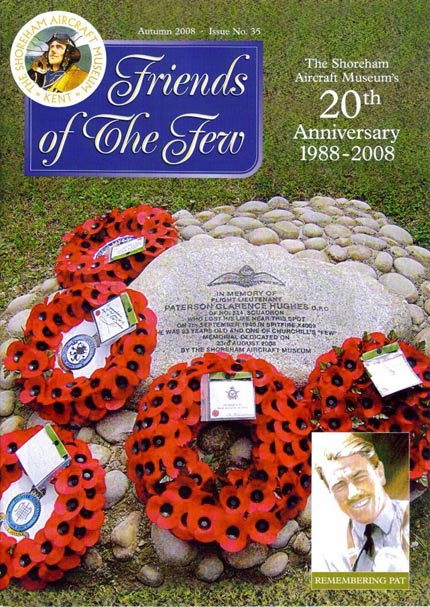
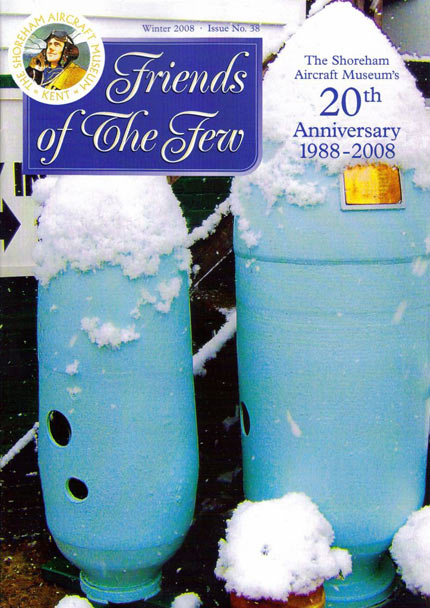
As promised to Museum members, they are now enjoying a new look and all-colour ‘Friends of The Few’ Club Newsletter that was launched with the Autumn 2008 issue; still packed with interesting articles about Museum exhibits, events, veteran stories, well researched combat accounts, special offers and competitions – it’s a veritable mix of serious reading and fun elements.
Benefits of Museum membership include:-
- A quality quarterly newsletter
- Free entry to the Museum
- Great discounts and special offers on Geoff Nutkins artwork
- Opportunities to get involved in Museum activities and events
- A free tea or coffee from the Teashop on every visit
Annual Museum membership only costs £15.00 (£20.00 overseas) and if interested in joining, then please contact the Museum.
Kent Spitfire Day
November 5th, 2008
On Sunday 2nd November the Museum took part in a joint venture with the Kent Spitfire team at Biggin Hill to raise funds to help keep the ‘Spirit of Kent’ up where she belongs.
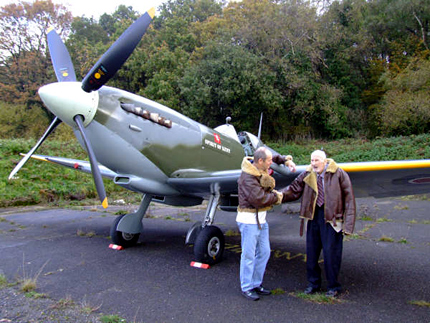
Supporters enjoyed a unique opportunity to view and photograph the magnificent fighter parked up in one of the original wartime revetments on the airfield where modern day Spitfire pilot Clive Denney chatted about what it is like to fly vintage aircraft; and joining Clive was Spitfire veteran Flight Lieutenant Bill Sanders who flew with 609 Squadron at Biggin Hill in 1941 and also with 19 Squadron later in the war.
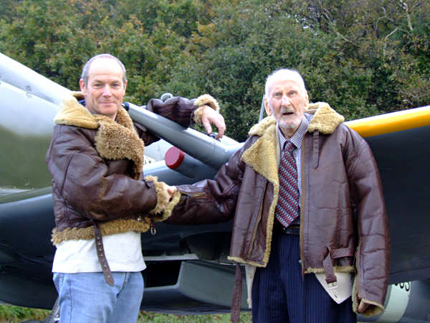
Bill recently appeared on the TV news when as a treat for his 92nd birthday he was flown by helicopter to the RAF Museum at Hendon. When asked how he was enjoying his first helicopter ride, Bill replied by saying “It’s a bit slow!”
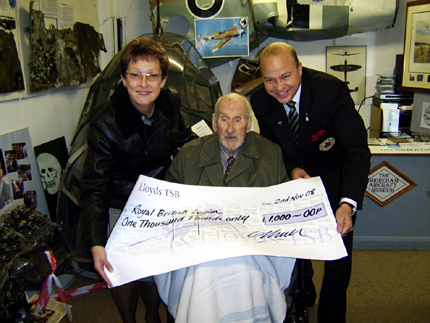
Bill was also brought to the Museum for a look around, and very kindly helped to present a cheque for the Royal British Legion amounting to £1,000 which was raised by John Ball who had trekked through France and over the Pyrenees following an old escape route taken by shot down Allied airmen during the war.
It is hoped that this enjoyable Kent Spitfire event can be repeated in the near future.
www.kentspitfire.co.ukHindenburg’s and Wilde Sau’s
October 14th, 2008
The Museum was delighted to welcome a Luftwaffe veteran who knew a thing or two about Junkers Ju88′s. Erich Schmidt was an Air Engineer and Flight Instructor who initially served on the Eastern Front with Kampfgeschwader 1 ‘Hindenburg’.
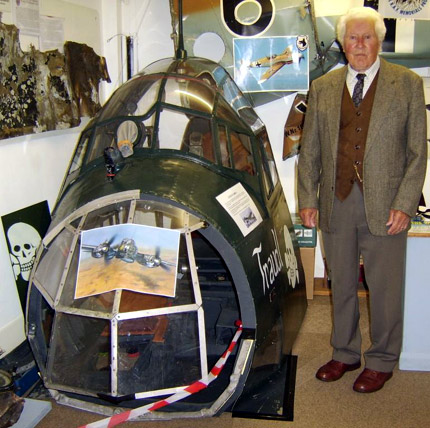
Later in the war he found himself up against RAF bomber streams with the Nachtjagd including the specialist ‘Wilde Sau’ (Wild Boar) unit formed by Major ‘Hajo’ Hermann, when Ju88′s were used to drop flares to illuminate the targets for single-seater nightfighters to attack.
Erich’s luck ended in December 1944 during a ground retreat through Belgium when his truck ran out of fuel and he fell into the hands of the US Army.
Being an engineer, Erich was also very interested in the Junkers Jumo engines on display in the Museum, which he once knew very intimately.
‘Schnellbomber’ lands in Shoreham!
August 17th, 2008
The Museum has recently taken proud ownership of a partially restored forward cockpit section of a Junkers Ju88A-1 ‘Schnellbomber’ (High-speed bomber).
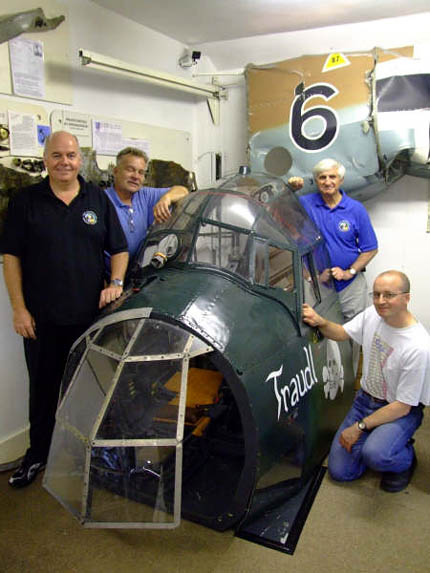
This wonderful exhibit will form the centrepiece of the new Museum wing due to open at Easter 2009. The aim of this long-term project is to restore the cockpit section to the rearward facing gunner’s position.
The operational history of this particular German bomber is being researched and it is known to have been constructed in 1940 and to have served with a Luftwaffe bomber unit during the Battle of Britain, prior to further service on the Eastern Front.
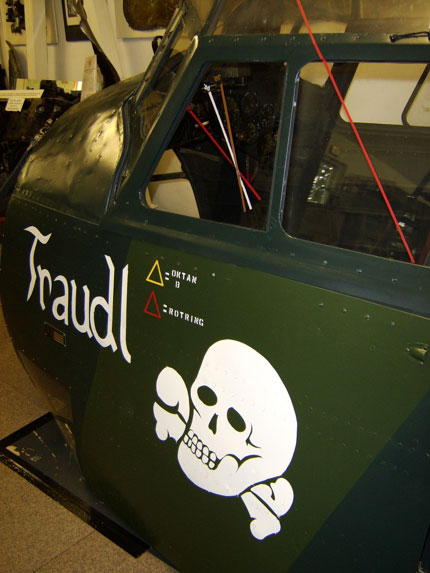
The unit markings applied to the aircraft are those belonging to Kampfgeschwader 54 ‘Totenkopf’.
Apart from the complete Junkers Ju88 on display at the RAF Museum, Hendon, the Ju88 cockpit section now on show at the Shoreham Aircraft Museum is believed to be the only other substantially intact example of this aircraft type in Great Britain.
Cellar Air Raid Log
August 12th, 2008
What must be a unique relic and wonderful piece of local wartime history was recently kindly donated and brought along to the Museum by Karen Harwood. Seemingly at first glance to look like a piece of scrap timber, it is in fact a length of old staircase that once led down to a cellar being used as an air raid shelter during the Second World War.
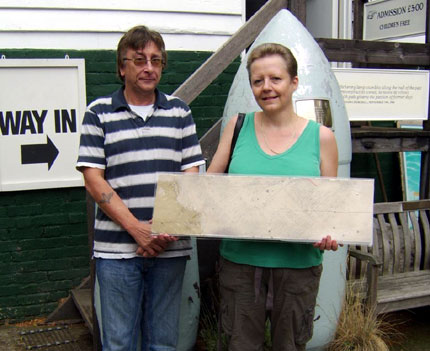
In 1940, an unknown but enterprising individual wrote the date and time of every air raid warning after each time they descended the stairs to seek shelter during The Blitz. The log begins in October 1940 and continues into 1941. There is even mention of the terrifying ‘Doodlebug’ V-1 Flying Bombs that began to arrive in June 1944.
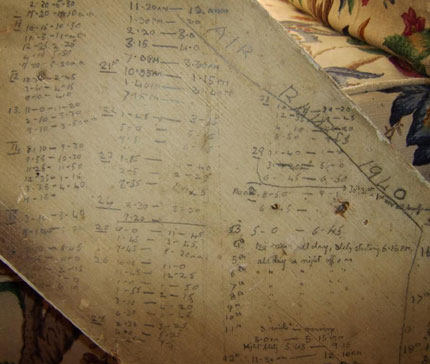
This wonderfully preserved piece of local history was rescued from a home in Bromley, Kent, currently used by the Leonard Cheshire Disability organisation that has been undergoing renovation and was saved from destruction by Mr Donald Laing.
If anyone has a recollection of this air raid log and who might have been the person to have written it, then please do contact the Museum.
Shoreham Showtime in Dartford
July 24th, 2008
Over the weekend of 19th/20th July 2008, the Museum spread its wings and participated in the Dartford Show to help raise awareness of the work the Museum does to remember and honour the exploits of air combatants over Kent during the Second World War.
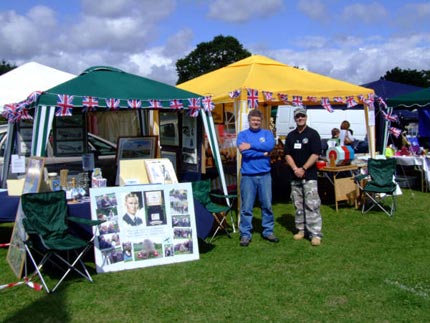
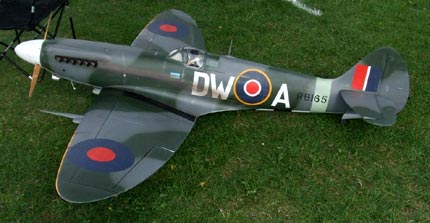
Museum volunteers manned a stall crammed with various exhibits and relics along with display boards giving information about the Museum and the Pilot Memorials Project. An impressive large 1/4 scale radio-controlled Spitfire model was kindly loaned by TJD Models [Sutton-at-Hone] for the stall that proved a great conversation piece with visitors, who also showed much interest in the varied range of displays.
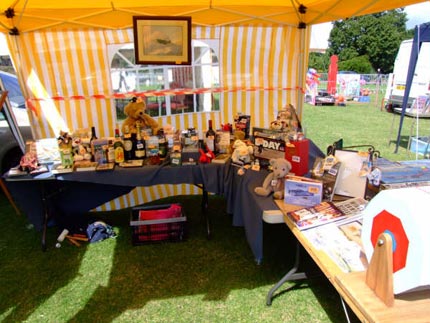
Visitors also tried their luck at the Museum tombola that offered many tempting prize goodies, which by the end of Saturday had all been snapped up. The tombola and generous coin donations raised a good sum of money that will go towards the pilot memorials fund-raising pot.
The efforts of the volunteer staff was rewarded when the Mayoress chose the stall to receive 1st Prize in the ‘Best in Show’ competition for its range of displays and the Memorials Project, and presented a shield that is to be engraved with the name of the Museum.
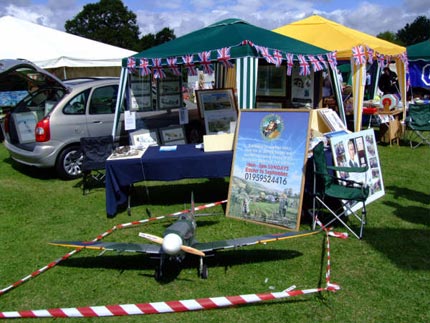
Participation in local events is proving a very worthwhile exercise for the Museum, not least to highlight the good and interesting work it carries out and to encourage people to visit the ‘best kept secret in the Darent Valley’!
Jack of all experiences!
July 2nd, 2008
The Museum was delighted to welcome a wonderful guest on Sunday 29th June 2008. Flight Lieutenant Jack Belsey was a pilot with RAF Bomber Command during the Second World War whose experiences were many and varied. In training during 1940, he found himself receiving instruction in dive-bombing whilst flying Airspeed Oxford trainer aircraft as a contingency should Germany have invaded England.
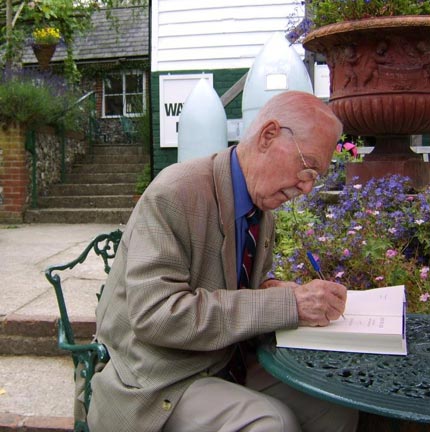
His first operational tour was flying Vickers Wellington bombers with 115 Squadron and he had much to thank Sir Barnes Wallis and his geodetic construction in the design of the ‘Wimpey’ for standing up to flak damage. After a period as an instructor Jack returned to operational flying with No.7 Squadron and the mighty 4-engined Short Stirling. He liked certain qualities of the Stirling despite its poor operational ceiling and a tendency for electrical failure, which necessitated winding down the big and heavy undercarriage by hand.
No.7 Squadron became a Pathfinder unit in late 1942 and the following year converted to the magnificent Avro Lancaster. One of Jack’s more memorable experiences in addition to a bale out in 1943, occurred over Hamburg one night when he had to take extreme evasive manoeuvres upon being ‘coned’ by enemy searchlights. The artificial horizon instrument ‘toppled’ over and suddenly Jack and his crew found themselves inverted and entering into a dive. It took the combined efforts of Jack and his Flight Engineer pulling on the control yoke to right their bomber and bring it out of its terrifying dive.
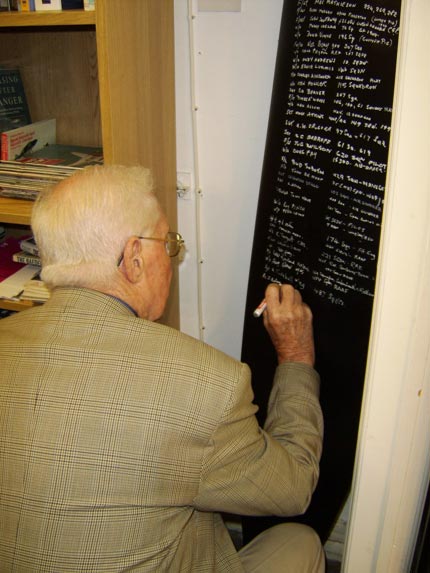
Jack shared many other amazing tales of his experiences, and he proved himself a great survivor when one considers the huge sacrifice of over 55,000 members who served with Bomber Command during the Second World War. We are grateful for his brave service and the Museum was very proud to have Jack sign the ‘Bomber Boys’ propeller blade.
Garden Safari without the Elephants!
June 17th, 2008
Over the weekend of 14th/15th June 2008, Shoreham Village held a Garden Safari, where villagers opened up their pretty and well presented gardens to the general public to help raise funds for the Village Church.
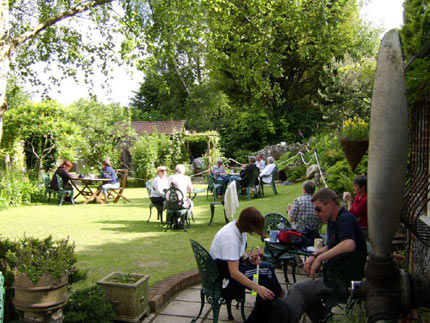
The Museum and Teagarden joined in with the ‘safari’ and experienced one of its busiest weekends on record with a constant stream of delighted visitors, most of whom quenched their thirsts and were tempted by the great range of cakes! Many safari visitors who took time to look around the Museum were very praiseworthy about the interesting and well presented exhibits.
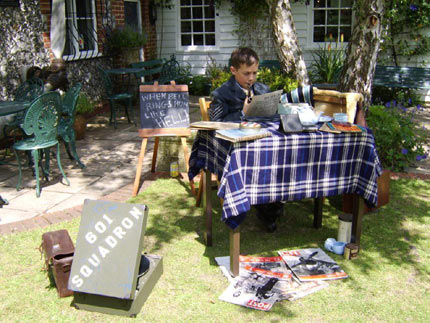
The generally dry, warm and sunny weather enabled many visitors to partake of their tea and cake in the teagarden where they found a young RAF Sergeant Pilot Callum at ‘Readiness’ – well, ready for his next tea and a ‘wad’ [cake]. Mind you after a number of ‘Scrambles’ [to the loo] throughout the day, it all became too much and he eventually stood down for forty winks!
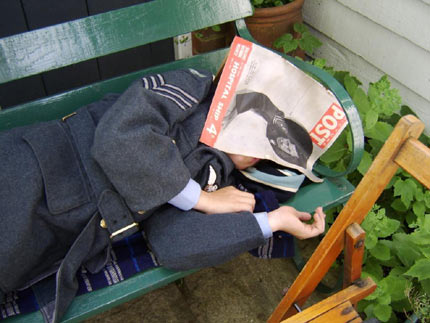
The participation of the Museum in the Garden Safari proved to be very enjoyable and made for a great start to the summer ahead.
May Day Bank Holiday Visitors
May 7th, 2008
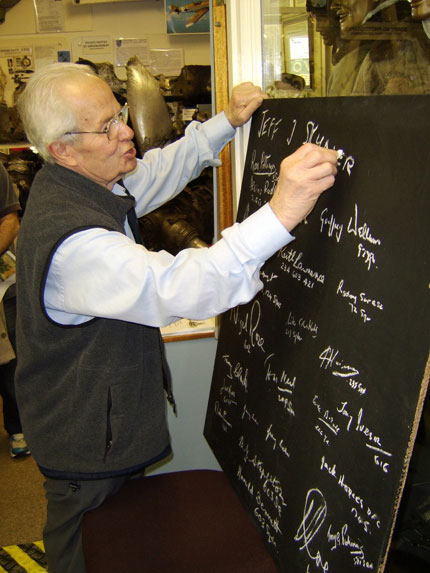
The Museum was honoured to find an interesting ex-RAF wartime pilot visiting on Bank Holiday Monday. Jeff Skudder, a Flight Sergeant Pilot, flew the mighty P-47 Thunderbolt with the RAF and he kindly agreed to sign his name in chalk on the Museum blackboard to add his to more recognised names like Bob Doe, Tom Neil and Jimmy Corbin. According to Jeff, the Americans liked to describe their big fighter as an “Eight-ton, eight-gun all-aluminium pursuit ship”. The RAF fly-boys had their own description, which we’ll leave you to guess the last word! They preferred the description, “Eight-and-a-half tons of screaming s***!”
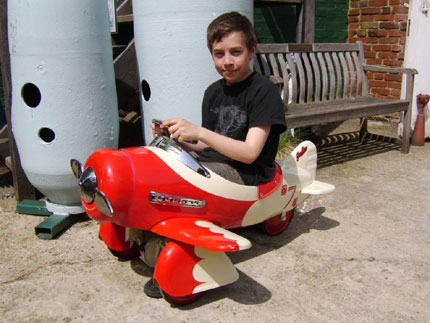
A younger visitor to the Museum was 12-years old Callum, who skillfully managed to drop-in and land [Oh alright then! - pedal] and park up his little brothers Gee Bee Racer in front of the Museum entrance without pranging into the adjacent Luftwaffe bombs on display. Young Callum is a bit of a star who has already developed a strong interest in wartime history and he is keen to be a volunteer at the Museum, so we’ve signed him up!
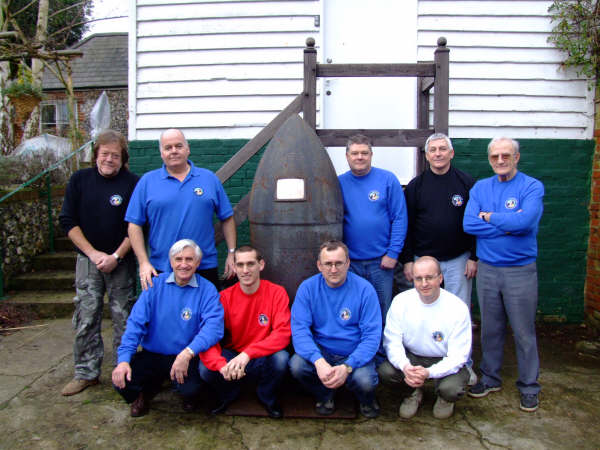
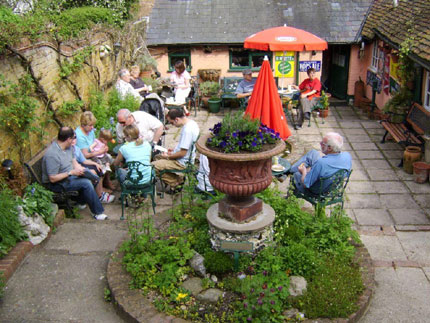
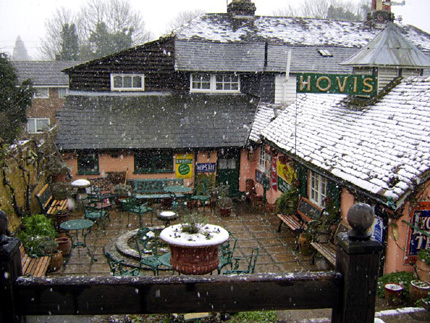
With the Bank Holiday weather proving to be reasonably warm and sunny helped to fill up the Museum Teagarden as evidenced in the accompanying picture of the lower terrace. Hopefully this is a sign of many more warm and bright summer Sunday’s to come during 2008 – fingers crossed of course!
Battle of Britain Relic
April 23rd, 2008
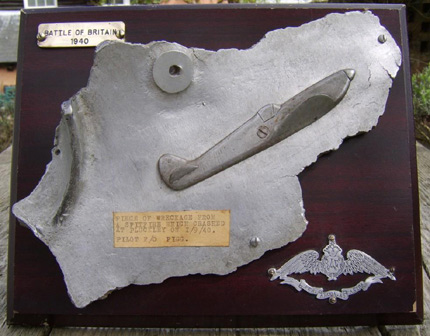
The Museum was happy to receive an interesting item from Mr Alan Wooler of Abbey Wood in Kent and his grandson who visited the Museum on Sunday 20th April 2008. Mr Wooler kindly donated a wooden plaque on which was fixed a relic from a Spitfire that crashed during the height of the Battle of Britain. Interestingly the relic has a well crafted little metal Spitfire attached to it.
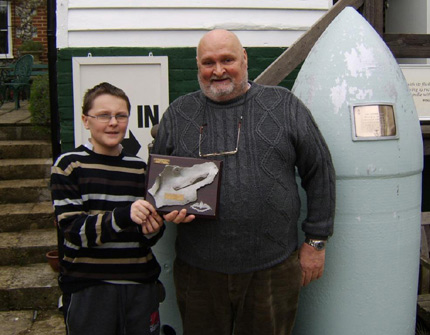
The relic which could possibly be a piece of Merlin engine casing, originally came from the crash site of the Spitfire flown by 22 years old Flying Officer Oswald St.John Pigg who was shot down and killed on Sunday 1st September 1940.
Oswald Pigg was born in 1918 and joined the RAF in early 1937, and after flying training was posted to No.72 Squadron and was still serving with the Squadron at the time of Dunkirk when he claimed a Junkers Ju87 ‘Stuka’ shot down. His Spitfire however was hit by return fire from another ‘Stuka’ and he crash-landed at Gravesend in Kent with a slight wound to one of his legs.
During the Battle of Britain whilst No.72 Squadron was based at Acklington in Northumberland, Flying Officer Pigg claimed a Messerschmitt Me110 destroyed off the East Coast near Newcastle when Luftflotte Five based in Norway carried out its one and only large scale daylight attack against England.
At the end of August 1940, No.72 Squadron were posted to the Biggin Hill Sector. During a late morning patrol on the first day of September, a Messerschmitt Me109E attacked and shot down Flying Officer Pigg who was at the controls of Spitfire MkIa serial P9458 which crashed at Elvey Farm, Pluckley near Ashford in Kent. He is buried at St.Oswald’s Burial Ground in Durham.
The Shoreham Aircraft Museum is grateful to Mr Wooler for handing on this fragment of history, which allows us to remember another brave sacrifice by a Battle of Britain pilot.
The Great Evader
April 17th, 2008
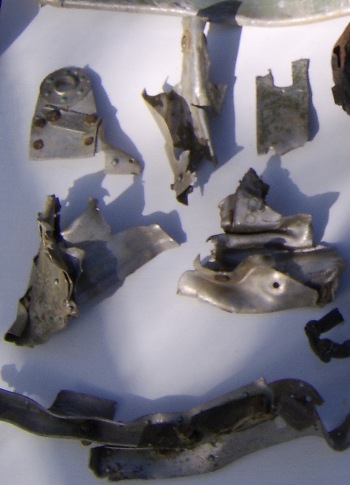
Notwithstanding the new exhibits and displays prepared over the winter period to herald the 20th anniversary of the Museum, another new display was unveiled on Sunday 13th April 2008. Thanks to the generous donation of relics by Mr Simon Brunt, a display now records the tragic loss of Warrant Officer Richard Blumer of the Royal Australian Air Force on 25th June 1944 when his Supermarine Spitfire MkXIV serial RM617 from No.91 ‘Nigeria’ Squadron, crashed at Nettlestead near West Malling in Kent.
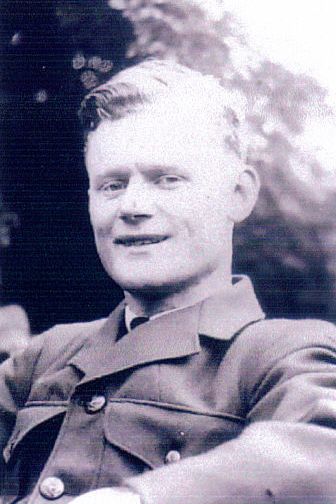
‘Red’ Blumer as he was known on account of his bright ginger hair had a very dramatic albeit short flying career, which started in early 1941 upon joining the RAAF and then undergoing flying training in Canada where he crashed an aircraft due to unauthorised low-flying. Possibly as a result of his misdemeanours, Sgt Blumer was retained as a Staff Pilot in Canada on gaining his ‘Wings’ and it was not until February 1943 that he was posted to England and after conversion training then joined No.91 Squadron at RAF Hawkinge to fly on cross-Channel fighter sweeps.
Flight Sergeant Blumer claimed his first success in air combat on 8th September 1943 when he destroyed a Focke-Wulf Fw190 over Northern France and at the end of the month his ‘tally’ stood at 2 ‘Destroyed’ Fw190′s and one half-shared ‘Destroyed’ Fw190. After one more success, this time against a Messerschmitt Me109 in October 1943, ‘Red’ Blumer’s luck ran out.
On 6th November 1943 he was shot down by flak north of Rouen during a ‘Rhubarb’ sortie, but managed to avoid capture by the Germans and eventually made contact with the French Resistance who guided him to neutral Switzerland . Classed as an ‘Evader’ by the Swiss authorities, he was sent to an RAF Camp in that country, but weeks later the young RAAF pilot again made contact with the French Resistance who guided him down towards Spain, but this time the Germans caught him. His plucky nature however saw ‘Red’ Blumer slip away from his captors and he then managed to reach Spain before heading to Gibraltar and a safe return to England .
After a period of convalescence, W/O Blumer re-joined No.91 Squadron at RAF West Malling during the early days of June 1944 as the Allied invasion of Occupied Europe gained a foothold in Normandy . Soon however, V-1 Flying Bombs began to appear over the skies of southeast England and No.91 Squadron were put to task on ‘Anti-Diver’ patrols to combat the menace of the pilotless missiles heading towards London. After one such ‘Anti-Diver’ patrol on Sunday 25th June, ‘Red’ Blumer put down his Spitfire RM617 at Staplehurst Advanced Landing Ground to refuel and after taking-off again for the short return flight to West Malling, the Spitfire suddenly spun in and crashed killing the 23 years old Aussie. Today ‘Red’ rests at Brookwood Military Cemetery in Surrey and his gallant sacrifice is remembered by the Shoreham Aircraft Museum.
Who ordered the Snow?
April 8th, 2008
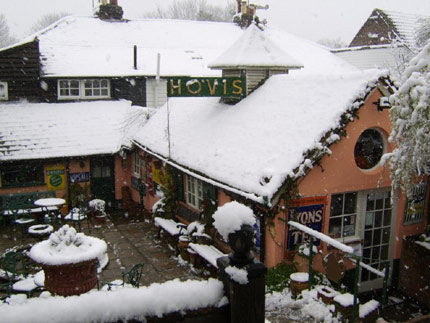
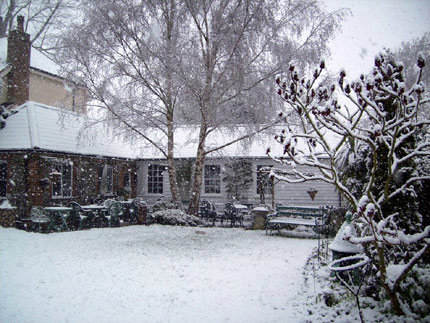
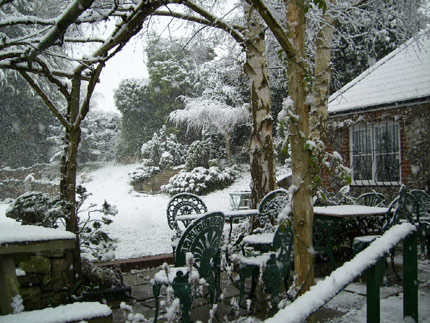
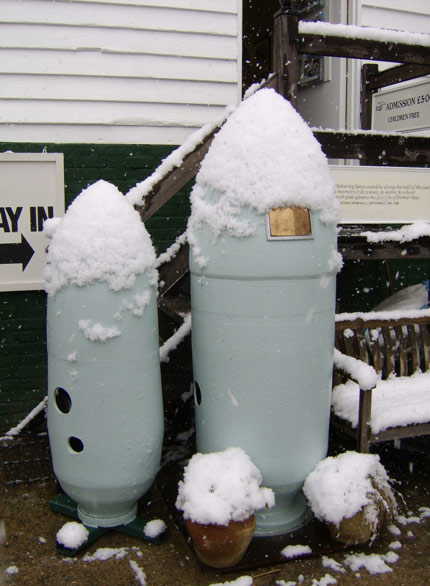
For once the weather forecasters were correct and a good layer of real snow fell upon Shoreham Village on Sunday 6th April 2008. It made for a very picturesque Museum teagarden. The winter wonderland scene was later the arena for a snowball and in some cases – snowboulder fight! A snowman also appeared, but he was too embarrassed to let his picture appear on the website!
A Great Escape
March 26th, 2008
Over the Easter period, the Museum was very pleased to find a RAF veteran with a very interesting past pay a visit. Warrant Officer Ralph Targett served as an Observer with No.221 Squadron in the Mediterranean, and in mid-1942 during a detachment to Malta came under the command of the legendary RAF reconnaissance pilot Adrian Warburton. Having survived being shot down once, it was in September 1942 that Ralph and the crew of his Wellington aircraft were shot down over the sea off Sicily and luckily were picked up albeit as prisoners of the Italians.
Imprisoned in Camp PG59 at Servigliano to the south of Ancona for about a year, it was after Italy surrendered in September 1943, that Ralph took his opportunity to escape. As one of the many Allied Prisoners of War who managed to flee from captivity, Ralph headed into the mountains to join up with Italian partisans that were resisting the occupying German troops. Some months later during 1944, Ralph managed to reach the advancing Allied forces and was subsequently returned home.
As is a Museum tradition, Ralph was kindly asked to sign the ‘Bomber Boys’ propeller blade, which he obligingly did. There is also a propeller blade in the Museum for ‘Fighter Boys’ to sign.
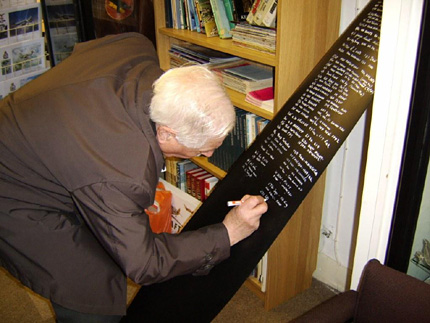
For anyone intending to visit the Museum and you have a relative who was a wartime RAF ‘flyer’, then do bring them along if at all possible to see the Museum and to sign the propeller blades.
Open For Winter!
March 25th, 2008
On Easter Sunday 23rd March 2008, the Shoreham Aircraft Museum opened its doors to herald the start of the 20th anniversary celebrations since it was founded. ‘Typical’ British weather tried to upset things with a last hurrah from the winter season with icy cold temperatures and a good dusting of snow. Fears that the weather would cause visitor numbers to be low proved unfounded, as happily very many Museum ‘Friends’ and members of the public both young and old turned out to visit Shoreham to keep the Museum and Tearoom busy on Easter Sunday and Bank Holiday Monday.
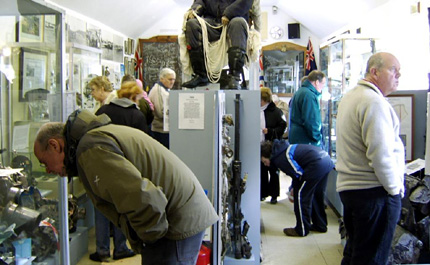
Despite the freezing conditions, the usual warm atmosphere of the Museum kept spirits high, and comments from visitors ranged from:-
“The exhibits look great and are very informative.”
“I will definitely re-visit when the weather is warmer, and will bring friends too.”
“The steaming hot mug of tea and the jam-filled scone were delightful and welcome.”
“Thank you for the plastic bags to put over my muddy wellies!”
It’s fingers crossed for a pleasantly warm and sunny year ahead – on Sunday’s at least!
In Remembrance of Frank Nutkins
March 19th, 2008
A sad loss on the eve of the Museum’s 20th anniversary
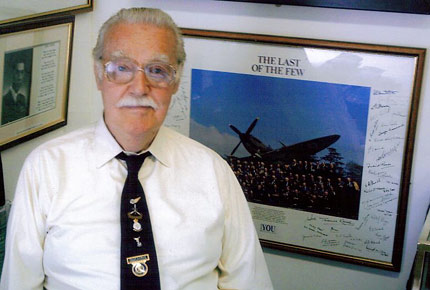
As the Museum gears up to celebrate its 20th anniversary, one co-founder will be sadly missing.
Born in 1924, the young Frank Walter Nutkins grew up in the family home at Plumstead in Southeast London where he cultivated a talent for drawing, and in 1940 with the Battle of Britain raging in the skies above his home he would often watch the dogfights from a vantage point up on Shooter’s Hill. When he wasn’t spectating, he would depict the fierce air battles on paper and despite the excitement generated by the sound of roaring engines, the rattle of machine gun fire, the thump of cannon and the boom of the anti-aircraft guns, Frank was witness to the sharp reality of that summer when he saw aircraft fall from the sky.
With the coming of age, duty called and Frank joined the RAF as a Wireless Operator/Air-gunner and he carried out some of his training in the Middle East, where the gunnery practice didn’t always meet with favour from the local natives who became very adept at running from what can be best described as wayward shots!
Frontline operational service came when Frank was posted to ‘2nd TAF’ or the Second Tactical Air Force operating in the skies across Western Europe. Serving as a crewmember in North American Mitchell twin-engine bombers with No.180 Squadron, he served through 1945 to the end of the war attaining the rank of Warrant Officer.
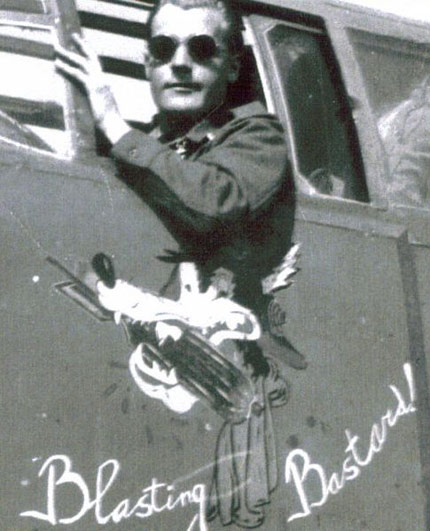
Post-war, Frank carved for himself a career in the print industry and settled into family life. A combined interest with his son Geoff in aviation art and archaeology, especially from the Battle of Britain period, eventually led to the present day Shoreham Aircraft Museum. For many visitors to the Museum, it was the sight of being greeted by Frank that will remain an abiding memory, and sadly there isn’t the room to recount the many happy times and huge laughs surrounding Frank
Thus it was a terribly sad day in December 2007 when after a short illness, Frank passed away in hospital. The Museum and all its members lost a dear friend. His funeral and thanksgiving service took place at the RAF Chapel at Biggin Hill on Friday 28th December where Frank received a fitting RAF send off in an Ensign draped coffin upon which was placed a commemorative RAF sword. With an Air Training Corps Guard of Honour, a final tribute in the shape of a Supermarine Spitfire from Duxford flown by Air Marshal Cliff Spink performed a series of low fly-bys over the Chapel to dip a wing in salute to one of its own.
A Mystery Stick-top
March 14th, 2008
Biggin Hill yields a remarkable find – but from which Me109 did it come from?
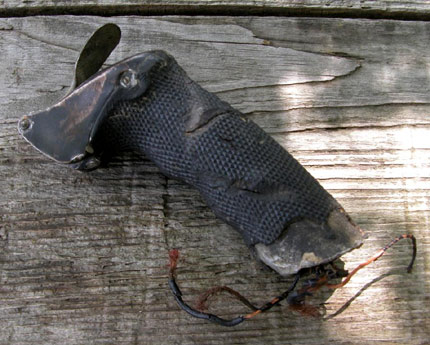
This might sound like the stuff dreams are made of for collectors of Battle of Britain relics, but about 30 years ago a young 8 year old girl and resident of Biggin Hill was out playing with friends in woods near the former RAF aerodrome. The youngsters had a metal detector with them and after finding the usual bottle tops and other metal scraps, they suddenly had a high pitched note wail from their detector.
Digging into the loose soil, the young girl soon hit upon something unlike anything she had seen before. She gleefully headed back home to show off her find, but never really discovered what it was she had found except that it was probably from an old aircraft. The strange find ended up being boxed and largely forgotten in the loft of the family home.
During a visit to the Museum in 2007 this same young girl now a little more grown up, recognised something in a display very similar to what she had unearthed all those years ago. Told that it was the broken off stick-top from a control column, Museum staff were delighted recently to kindly receive the stick-top found at Biggin Hill 30 years ago for display in the Museum. But that is only the start to the story.
The stick-top was readily identified to be from a Messerschmitt Me109E. It hadn’t been sawn off from the control column, but had ‘snapped’ off with some force as a result of a devastating crash. In consideration of where the stick-top was unearthed, and as far as is known, there were four Me109’s that crashed in the vicinity of RAF Biggin Hill during the period of the Battle of Britain, and in date order these were:-
30th August 1940:- Two Me109’s from II Gruppe, Jagdgeschwader 54 flown by Leutnant R. Ziegler and Oberleutnant H. Rath collided over Biggin Hill. Ziegler baled out and his aircraft crashed at Oxted, and Rath also baled out as his aircraft broke up, which then came down in the area to the south-west of the aerodrome. [The Wealden Aviation Archaeological Group excavated an aircraft in 1976 that was possibly Rath’s Me109.]
9th September 1940:- Feldwebel Martin Honisch of 1 Staffel, Jagdgeschwader 53 was shot down and baled out. His aircraft crashed at Cherry Tree Farm [near the Old Jail Inn] to the south-east of the airfield. [Some relics from this Me109 were donated by an RAF Fitter serving at Biggin Hill in 1940 to the Kent Battle of Britain Museum at Hawkinge.]
15th September 1940:- Oberleutnant Julius Haase, the Staffelkapitän of 3 Staffel, Jagdgeschwader 53 was shot down and baled out, but his parachute failed him. His aircraft came down in Mollards Wood to the south of the runway. [Recovery of this Me109 took place in 1969, and the DB601 engine and other relics were recovered and are believed to be ‘stored’ at Halstead.]
2nd October 1940:- Oberleutnant Siegfried Stronk of 8 Staffel, Jagdgeschwader 53 was killed when he crashed after combat into a house on Sutherland Avenue in Biggin Hill to the south of the aerodrome. [A wing radiator from this Me109 is at the Hawkinge Museum.]
Investigation and continued research is on-going to try and confirm from which Me109 crash the stick-top came from.
If you have any Battle of Britain related items you would be willing to loan or donate for display to the Museum, then please do get in touch. Kindly see the Contact page.
Latest Acquisition
February 21st, 2008
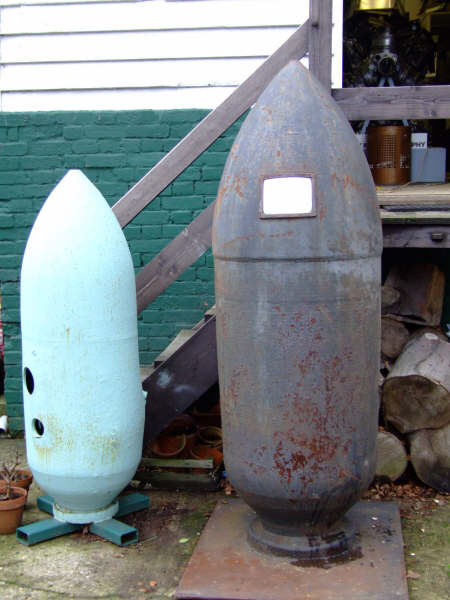
Our latest acquisition – a “Hermann” bomb which fell on Bermondsey during WW2, luckily not exploding!